


Most people primarily associate varicose veins with large, painful blue and purple spots that deform the legs of both sexes.But what looks so ugly is actually a disease that has developed, even advanced.The initial stages of the disease are practically invisible to others and are often not taken seriously by the patients themselves.
But failure to respond to pain, swelling and even more so spider veins is extremely dangerous, because the disease is very severe, does not go away on its own and there is a risk of developing dangerous complications.If the disease is ignored, not only ugly bumps will appear on the legs.Disturbance in venous flow will cause irreparable consequences in tissues, leading to the formation of trophic ulcers.This is a serious and painful disease that is difficult to cure.
If the disease progresses, the blood supply to the lower extremities will continuously decrease.This will lead to the fact that the tissues will no longer receive the necessary amount of oxygen and nutrients, since the blood vessels will become clogged, twisted and stop performing their functions.The result will be serious problems, including tissue death and the development of gangrene.And this is amputation and disability.Therefore, varicose veins require careful attention and the fastest possible response.Only by starting appropriate treatment early will it be possible not only to avoid serious consequences, but also to get rid of unsightly and uncomfortable bulging veins in the legs.
Causes of varicose veins in the legs
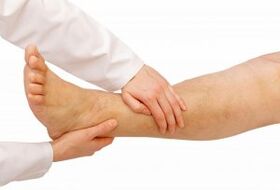
There are many reasons and factors that can stimulate the development of varicose veins.
There are many reasons why varicose veins develop in the legs.But basically, the driving force behind the development of this disease is due to many different factors such as working in a constant standing position, genetic predisposition or liking to wear uncomfortable high heels.
The real cause of varicose veins is interrupted vein flow.In the human body, blood circulates, that is, it constantly moves in the circulatory system.Once in the lower limbs, blood cannot flow back up on its own;it needs a “pump”.Its role is performed by special venous valves.
If they begin to fail to meet their duties, so-called reflux occurs - the backflow of blood due to valve failure.Such disorders are caused by problems with the physiological balance between muscle cells, elastic fibers of vessel walls and collagen.When blood returns, it leaks into the tissues, leading to the formation of chronic venous insufficiency.
In this case, swelling appears and then, when blood components leak into the tissue, the fluid stagnates (stasis) and microcirculation is disrupted.Cells gradually die and trophic ulcers appear at the site of blood accumulation.These are tissue defects that are painful and do not heal over time, opening the door to infection and even more dangerous health problems.
The first signs, their stages and symptoms
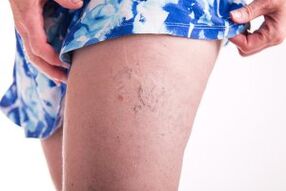
Symptoms of varicose veins are directly related to the stages of the disease.
Varicose veins in terms of prevalence can be considered one of the most common diseases.It has been known since ancient times, there is not only documentation but also material evidence.In Egypt, a mummy was found with traces of varicose veins and apparently trophic ulcers that had been treated several times.
The disease affects both men and women, but is more common in the opposite sex.The main reason for the difference is that women give birth and wear high heels and spend more time on their feet.
Varicose veins can develop at a young age, often as a result of pregnancy and childbirth, when there is a large load on the venous system due to fetal growth and pressure, and later from the stress of childbirth.
At first, the symptoms of the disease are subtle and difficult to distinguish from other problems.
The first sign noticed is a slight pain in the calves, especially after walking, usually due to normal fatigue.Patients may complain that they get tired quickly and cannot walk long distances like before.He is bothered by cramps, burning sensation, bloating, often worse at night;At night, swelling appears, a feeling of heaviness, and the legs are "full of lead".
Often, at this stage, patients do not consult a doctor, assuming that the discomfort is due to uncomfortable shoes, heavy feet, heat and fatigue.But the disease can progress over years, even decades, until the condition gets so bad that bulging blue veins under the skin become apparent or spider veins appear.And even the presence of such symptoms and pain, clearly visible along the veins, does not always force the patient to seek medical help.
There are many methods of classifying the disease, but the most common is to use the division into stages:
- Firstly– damage to a small number of blood vessels, mainly in the lower part of the leg, accompanied by pain, fatigue, and mild venous manifestations.Treatment started at this stage is especially effective.
- Monday– additional symptoms of impaired venous flow: swelling, fluid retention, mild pain in the calves and feet.A common sign is extreme fatigue at the end of the working day.
- Tuesday- development of venous valve insufficiency.The formation of twisted, twisted veins, severe swelling, changes in skin color towards cyanosis, a tendency to form trophic ulcers is emerging.A characteristic symptom is the appearance of pain even with light exertion in the legs.
- Wednesday– prominent, convex, complex green veins under the skin, forming lymph nodes that clearly highlight the skin of the limbs, and non-healing trophic ulcers appear.At this stage, only urgent surgical intervention can help.
It is necessary to treat varicose veins as soon as possible, do not resort to amateur measures, but be sure to seek help from a specialist - a phlebologist.He will evaluate the condition of blood vessels, conduct diagnosis and prescribe the correct treatment.Usually it is combined, consisting of different methods of influence.
Diagnosis of disease
In the early stages, varicose veins in the legs may not be detectable by visual methods.The best way is considered to be two-vessel ultrasound of the lower extremities.It allows you to get a comprehensive picture of the condition of the veins in the legs, including deep veins, evaluate the level of blood circulation, without causing discomfort or pain to the patient, and at the same time contributes to the correct selection and prescription of the optimal treatment method.
Treatment with medication
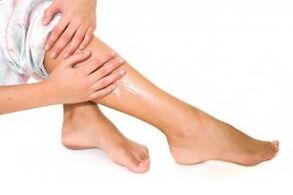
To treat varicose veins in the early stages, special creams, ointments and tablets are used.
The main threat that varicose veins pose is thrombophlebitis, that is, an inflammatory process in the walls of blood vessels.With it, the risk of thrombosis increases sharply, and blood clots are a direct threat not only to the patient's health, but also to his life.A “breakaway” clot can travel through the bloodstream to vital organs and cause potentially fatal conditions - pulmonary embolism, heart attack or stroke.
In the early stages of the disease, combination therapy is used, which is mainly based on the use of special drugs - varicose veins and compression products.The main drugs are blood thinners and prevent the formation of blood clots, tone and strengthen blood vessels, improve blood circulation.
Compression therapy includes the use of special elastic bandages and compression hosiery - socks, knee socks, stockings and tights.
They must necessarily be selected by the doctor depending on the degree of development of the disease.In the early stages, preventative compression hosiery is most often used.High-quality medical products have an appearance similar to special knitwear, so they can be worn every day.They are especially recommended for women who have to walk most of the day - salespeople, hairdressers, teachers.
Traditional methods of treating diseases
Traditional medicine treats varicose veins in the legs in the following ways:
- Compressed green tomatoes.This remedy may seem strange at first glance, but it perfectly helps reduce inflammation, bulging blood vessels and swelling.Cut unripe tomatoes into circles and apply them to the painful area overnight and remove them in the morning.
- Horse chestnut tincture.This plant is widely used to treat vein problems so you can do it at home.Rubbing the legs with tincture helps relieve pain and swelling, tones and strengthens the veins.
- ginkgo– an old tree with interesting triangular foliage.Its leaves are used as a very effective remedy to improve blood circulation and strengthen blood vessel walls.
You can fight the manifestations of varicose veins with the help of various herbal preparations, but it is best to first consult a doctor.
Surgical intervention
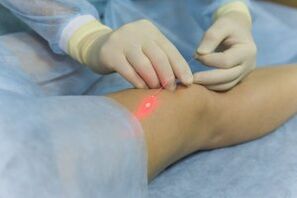
The essence of this operation is ligation and removal of pathologically altered veins.
Surgical procedures to treat varicose veins are a common phenomenon because the disease that has developed cannot be cured by conservative methods alone.
The most commonly used surgical methods are:
- vein ablation,or remove the affected veins.
- Laser coagulation– a modern method of clogging diseased blood vessels using a directed laser beam.Over time, the vessels stop working, become stiff and dissolve.This technique is considered gentle because it does not require incisions, patient hospitalization, and long recovery times.The procedure provides excellent cosmetic results.
- Radiofrequency coagulation– a way to eliminate reflux in the large or small saphenous vein.Its effectiveness is comparable to phlebectomy, but does not require recovery time and is more easily tolerated by patients.
- Sclerosis.Method in which a special drug is injected into the vein under the control of an ultrasound device, resulting in venous adhesion.
Prognosis of treatment and possible complications
Varicose veins in the legs are a dangerous disease, easily leading to very dangerous complications.The main danger is the development of thrombosis, which can damage the entire body.The detachment and movement of a blood clot threatens a person with sudden death, since a blood clot that enters vital organs and clogs vessels can easily cause a stroke, heart attack or embolism.
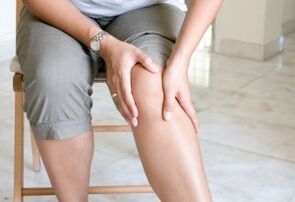
Progressive varicose veins can cause disability.
The second terrible threat that varicose veins bring is the loss of mobility and disability of a person.If the disease is left untreated, it can lead to complete blockage of the veins in the legs, leading to gangrene and doctors will have no other option to save the patient's life than to amputate a limb or both legs.
Such dire consequences can only be prevented by seeking timely medical help and strictly following the prescriptions.Timely treatment can save you from terrible complications and preserve the health and beauty of your feet.
Prevention is important to prevent disease.Doctors constantly repeat these simple rules, but most people deliberately ignore them until the problem of veins affects them personally.
Preventive measures to prevent varicose veins are as follows:
- Moderate physical activity.Both overload and passive sitting in an immobile position causing blood to stagnate in the lower limbs are equally harmful to vascular health.
- Quit bad habits - smoking and drinking alcohol.They have an extremely negative effect on the condition of the veins.
- Wear comfortable shoes with moderate heels, no more than 5–6 cm high.
- Use preventative compression stockings if necessary, during “standing” work or, due to genetic aggravation, during pregnancy and childbirth.
- Fight against being overweight.Significant body weight is one of the factors that contribute to the development of varicose veins.
Following these simple rules will help your veins stay healthy and keep your legs beautiful and slim.